Overview
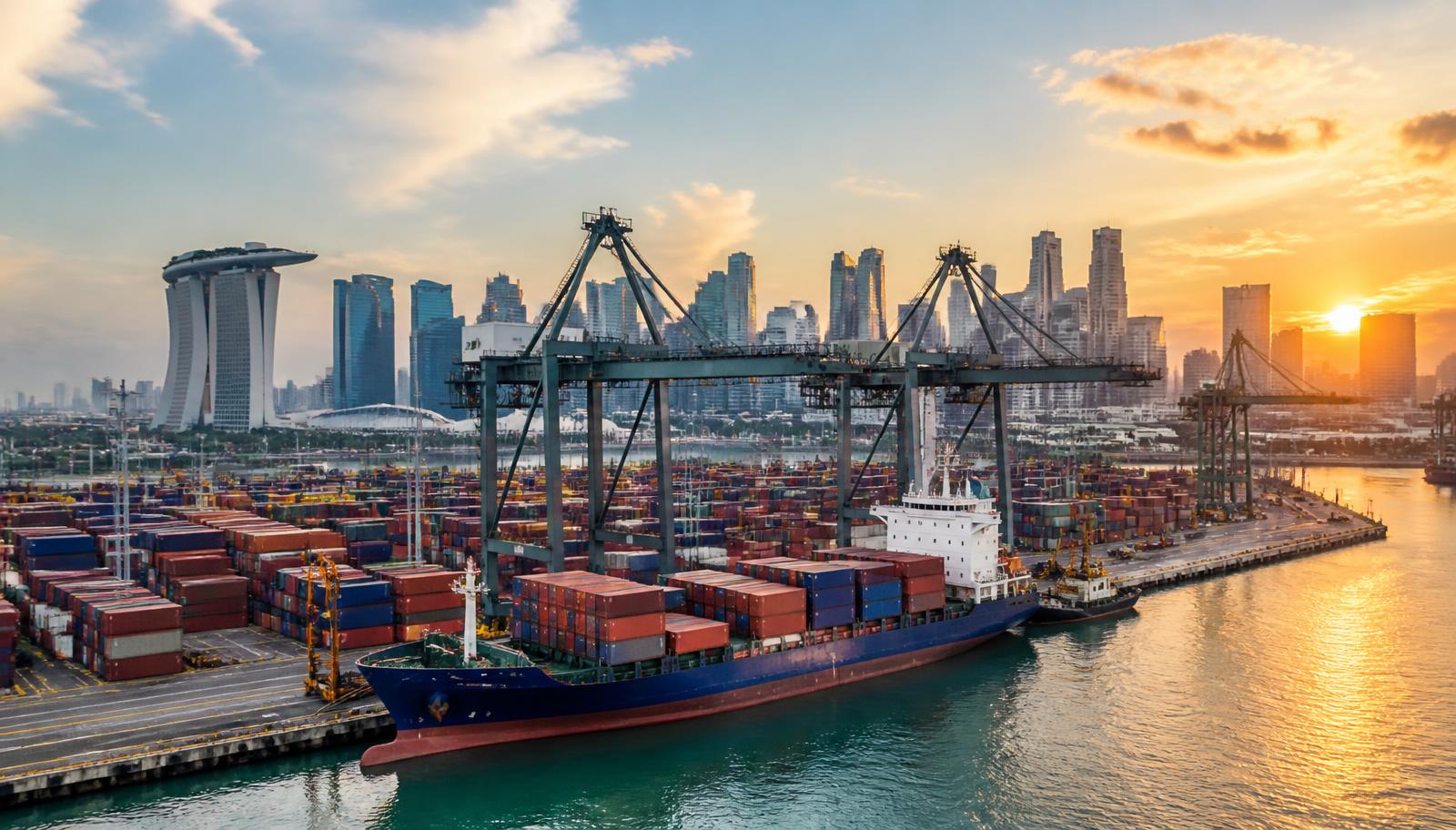
Sungrow is a global leader in renewable energy solutions, requiring a robust logistics infrastructure to support rapid international expansion and complex supply chain operations across multiple continents.
By Leo Zhang, Principal Solution Architect, Deep Insights · Published November 18, 2025 · 12 min read
Customer background
Sungrow is one of the world's largest manufacturers of photovoltaic inverters and energy storage systems. What began as a research-driven engineering company in Hefei now ships equipment to more than 150 countries, supplying utility-scale solar farms, commercial rooftop projects and residential installers on every continent. The company's product range spans string inverters weighing a few dozen kilograms to containerised energy storage units that require heavy-lift transport, project cargo handling and specialised port arrangements.
That product mix makes Sungrow an unusually demanding logistics shipper. A single utility project can consume hundreds of containers scheduled against a construction milestone that cannot slip; a delayed vessel does not merely raise a freight bill, it idles cranes, contractors and grid-connection windows worth far more than the transport itself. At the same time, the residential and commercial channels behave like consumer electronics distribution, with high SKU counts, frequent small parcels and aggressive service expectations from installers.
The logistics organisation supporting this business grew as fast as the company did. Regional teams in Chinese Mainland, Southeast Asia, Europe, the Americas, the Middle East and Australia each built their own working practices, negotiated their own forwarder relationships and maintained their own spreadsheets. Each of these local approaches was defensible in isolation. Collectively, they made it impossible to answer the questions an executive team asks of a global manufacturer: what does it actually cost us to move a megawatt of product to a given market, and how reliably do we do it?
Why the company decided to act
Three pressures converged. Freight spend crossed the billion-yuan threshold, which moved logistics from an operational line item to a board-level financial exposure. Overseas revenue overtook domestic revenue, which meant customs compliance in dozens of jurisdictions became a permanent risk surface rather than an occasional project. And the pace of new market entry accelerated to the point where the logistics team was expected to stand up an operating model in a new country in weeks, not quarters.
The internal assessment was blunt. The team could not scale by adding people, because the constraint was not headcount but the absence of a common operating system. Every new market added another set of manual handoffs, another local spreadsheet, another reconciliation cycle. Sungrow chose to build a global logistics foundation on Deep Insights TMS Cloud rather than continue extending point tools that only ever solved one region's version of the problem.
Challenges
Outdated Manual Operations
Manual-driven operations failed to match the 'fast and accurate' business requirements, with response speed becoming a major bottleneck.
Lack of Document Standards
Global logistics documents were inconsistent, with customs clearance materials requiring repeated modifications, resulting in high compliance risks and communication costs.
Information Silo Effect
Cross-functional information feedback was delayed, logistics status was a black box, and supply chain upstream/downstream collaboration efficiency was low.
Inefficient Cost Control
Massive freight costs relied on manual reconciliation, with slow calculations and low accuracy, directly impacting cost control and cash flow.
Manual operations that could not match the business rhythm
Booking, documentation and status updates were driven by email and spreadsheets. A single export shipment could touch six or seven separate files maintained by different people, and the authoritative version of the truth was whichever attachment had been sent most recently. Response times to a customer asking a simple question — where is my container, and when will it arrive — were measured in hours or days because someone had to assemble the answer manually from a forwarder mailbox.
The operational cost of that pattern is easy to underestimate. Coordinators spent the majority of their day transcribing data that already existed somewhere else: from a purchase order into a booking request, from a booking confirmation into a tracking sheet, from a carrier invoice into an accrual file. Each transcription introduced a chance of error, and every error surfaced late, usually at the point where it was most expensive to fix.
- Six to seven parallel spreadsheets per international shipment lane
- No system of record for booking status, only email threads
- Customer status enquiries answered manually, typically within 4 to 24 hours
Document standards that differed by market
Because each region had built its own templates, the same commercial invoice or packing list would be formatted differently depending on which office produced it. Customs authorities are unforgiving of inconsistency; a mismatch between an HS code on a declaration and a description on a packing list can hold a container for days. Sungrow's teams were absorbing repeated document rework as a cost of doing business, and the rework was concentrated exactly where it hurt most — at destination, after the freight had already been paid.
The compliance exposure was equally serious. Without a single template library and validation layer, there was no systematic way to prove that a declaration had been produced from approved master data. Audit evidence had to be reconstructed after the fact from mailboxes and shared drives.
Information silos between functions
Sales committed delivery dates without visibility of vessel schedules. Production planned output without knowing whether space had been secured. Finance accrued freight based on last quarter's rates because current rates lived in a forwarder's quotation email. Each function was working with a partial and slightly stale picture, and the gaps between those pictures became the company's real planning error.
The most damaging silo was between logistics execution and cost. Operations optimised for on-time delivery, finance optimised for freight rate, and nobody owned the trade-off. Expedited air freight decisions that made sense operationally could quietly erode the margin of an entire project, and the erosion would only appear in the numbers a month or two later.
Freight cost control that relied on manual reconciliation
With freight spend above one billion yuan a year, reconciliation was performed by comparing carrier invoices against contract rate cards by hand. Analysts sampled rather than checked every line, because checking every line was not humanly possible at that volume. Sampling means accepting an unknown error rate, and in freight audit the errors are rarely symmetric: overcharges are far more common than undercharges.
Accrual accuracy suffered for the same reason. Month-end estimates were built from partial data and adjusted later, which made the logistics cost line volatile and hard for the business to plan against.
Export execution cycle time, before and after
Average elapsed hours per stage on core international lanes
What it shows: Removing manual transcription compressed the administrative portion of an export shipment from roughly 100 hours of elapsed time to under 20.
"The TMS platform has become the cornerstone of our global logistics operations, enabling precise cost control and seamless cross-border collaboration."
Supply Chain Director
Sungrow Global Supply Chain

Solution
Global Logistics Management Foundation
Built with TMS at the core, connecting supply chain upstream and downstream to create an end-to-end transparent, process-driven digital logistics system.
- Full-process transparency
- Automated cost compliance
- Ecosystem integration
A single global logistics data model
The programme started by defining one data model for orders, shipments, containers, documents and cost — and refusing exceptions to it. Every region maps into the same object structure, with local variation handled through configuration rather than through parallel systems. This decision was the hardest part of the project politically and the most valuable technically, because every downstream capability depends on the data meaning the same thing everywhere.
TMS Cloud became the system of record for the full international leg: booking request, carrier tendering, space confirmation, container assignment, customs documentation, in-transit milestones, proof of delivery and settlement. Upstream ERP order data flows in automatically; downstream finance receives structured, already-validated cost records rather than PDF invoices.
- One shipment object shared by sales, planning, logistics and finance
- Regional variation expressed as configuration, not as separate systems
- ERP integration for orders, master data and settlement postings
Standardised documents with validation at source
A central template library replaced local document formats. Commercial invoices, packing lists, certificates and declarations are generated from the same validated master data, so an HS code or a net weight cannot differ between two documents describing the same carton. Validation rules run before a document is released rather than after a customs officer finds the discrepancy.
The effect on clearance is direct: fewer amendments, fewer holds, and a documentary trail that can be produced for an auditor in seconds because it was generated by the system rather than assembled by a person.
Automated freight audit and cost transparency
Contract rates, surcharges and accessorial rules were loaded into the platform, which now prices every shipment at the moment it is booked. When a carrier invoice arrives it is matched line by line against the expected charge, and only genuine variances reach a human. Accruals are no longer estimates; they are the sum of priced shipments that have moved but not yet settled.
Cost allocation follows the same data model, so freight can be attributed to a project, a product line or a customer without a separate allocation exercise. For a company where a single utility project may span months and dozens of shipments, that attribution is what makes project profitability measurable.
- 100% of invoice lines audited automatically against contracted rates
- Accruals derived from priced shipments rather than historical averages
- Freight attributed to project, product line and customer at booking time
Connected ecosystem and AI workers
Forwarders, carriers and customs brokers connect through EDI, API and a partner portal, which removed the largest remaining source of manual data entry. On top of that connected layer, AI workers handle the repetitive judgement tasks that used to consume coordinator time: reading arrival notices, extracting milestones from unstructured carrier emails, flagging shipments whose predicted arrival no longer supports the committed installation date, and drafting the exception note a coordinator would otherwise write by hand.
The design principle throughout was that automation should remove transcription, not decision-making. Coordinators still decide whether to expedite, reroute or renegotiate; the platform ensures they make that decision with complete information, early enough for it to matter.
How the rollout was sequenced
Implementation began with a single high-volume export lane out of Chinese Mainland, chosen because it carried enough traffic to expose every edge case within weeks. That lane proved the booking, document and freight-audit mechanics end to end before any second region was touched, and it produced the reference configuration that every later market inherited.
Geographic waves followed at roughly quarterly intervals, each with a short parallel-run period in which the legacy spreadsheets remained as a safety net. The programme deliberately refused to extend that parallel period: keeping two systems alive is where global rollouts usually stall, because teams retain the old habit and the new data set stays incomplete.
Master data was treated as a workstream in its own right rather than a prerequisite checkbox. Consolidating carrier codes, port codes, product dimensions and HS classifications across regions took longer than configuring the platform itself, and the team is clear that the effort was the price of every downstream benefit — automated pricing, document generation and cost attribution all rest on that data being consistent.
Freight cost transparency ramp
Share of annual freight spend priced and audited in-platform
What it shows: Within five quarters every yuan of managed freight was priced at booking and matched line by line against carrier invoices.
Results
Financial Impact
Supporting ¥1B+ global freight precision accounting with transparent costs, significantly reducing financial risk and reconciliation costs.
Global Standardization
Documents and processes achieved global standardization, significantly reducing data quality issues and cross-border communication costs, improving delivery efficiency.
Financial control at billion-yuan scale
The most quantifiable outcome is freight cost accuracy. More than one billion yuan of annual global freight is now accounted for line by line, with every charge traceable to a contracted rate and an executed shipment. Cost transparency reached 100 percent of managed spend, meaning there is no longer a category of freight that is settled without systematic verification.
Because pricing happens at booking, the finance team's accrual variance narrowed dramatically and month-end close no longer depends on chasing forwarder statements. Invoice disputes that used to be discovered weeks after payment are now caught before payment is released.
Standardisation as an expansion enabler
Documents and processes are now global standards rather than regional dialects. The practical consequence is that opening operations in a new market is a configuration exercise rather than a rebuild: the templates, validation rules, cost model and reporting already exist, and the local team inherits them on day one.
Cross-border communication costs fell alongside the rework. When every party is reading the same shipment record, the volume of clarification email drops sharply, and the coordination effort that used to scale linearly with the number of markets no longer does.
Visibility that reaches the customer
Status information that once required a manual investigation is now available to sales, planning and, where appropriate, the end customer, directly from the shipment record. For project business this changes the conversation with contractors: the discussion moves from asking where the equipment is to jointly planning around a predicted arrival window.
Internally, the same visibility feeds exception management. Shipments whose predicted arrival threatens a milestone are surfaced automatically, which converts a large share of late-stage firefighting into early, cheaper intervention.
Document rework and customs holds
Indexed rate per 1,000 shipments
What it shows: Generating every document from one validated master record removed the inconsistency that caused most destination-side holds.
Where the saved coordinator hours went
Reallocation of the team's working week after go-live
- Exception management38%
- Carrier negotiation24%
- Project planning support21%
- Remaining manual entry17%
What it shows: The team did not shrink. Capacity moved from data entry into the work that actually changes cost and service outcomes.
Key Takeaways
- Achieved global document standardization across all international operations
- Enabled precise accounting for billion-yuan scale global freight costs
- Reduced cross-border communication costs through unified processes
- Established foundation for continued international expansion
Lessons learned
What the team would tell a peer
Sungrow's logistics leadership is consistent about the sequencing lesson. The temptation in a global rollout is to start with the market that shouts loudest; the better approach proved to be starting with the data model and one high-volume lane, proving the cost and document mechanics there, and only then rolling out geographically.
The second lesson concerns exceptions. Every region will argue that its situation is unique, and some of those arguments are valid. The discipline that made the programme work was insisting that uniqueness be expressed as configuration inside the shared model, never as a separate system, because a separate system re-creates the silo the programme exists to remove.
- Fix the data model before scaling geographically
- Prove cost and document mechanics on one high-volume lane first
- Allow local variation only as configuration inside the shared model
- Automate transcription, keep judgement with the coordinator
"We stopped arguing about whose spreadsheet was right. Once every region worked from the same shipment record, the conversation moved to what we should do about the shipment."
Global Logistics Manager
Sungrow International Logistics
Products behind this story
TMS Cloud
Transportation management for booking, tendering, in-transit visibility, freight audit and multi-leg international shipments.
Explore TMS CloudControl Tower
Cross-network visibility, exception detection and ETA prediction across every order, shipment and carrier.
Explore Control TowerSupply Chain Execution Cloud
The unified execution platform that connects warehousing, transportation, control tower and AI workers on one data model.
Explore Supply Chain Execution Cloud