Overview
Carrefour Taiwan operates over 100 retail stores requiring daily deliveries. Their city distribution network needed modernization to improve delivery visibility and customer experience.
By Daniel Wu, Director of Retail Distribution Solutions, Deep Insights · Published October 21, 2025 · 12 min read
Customer background
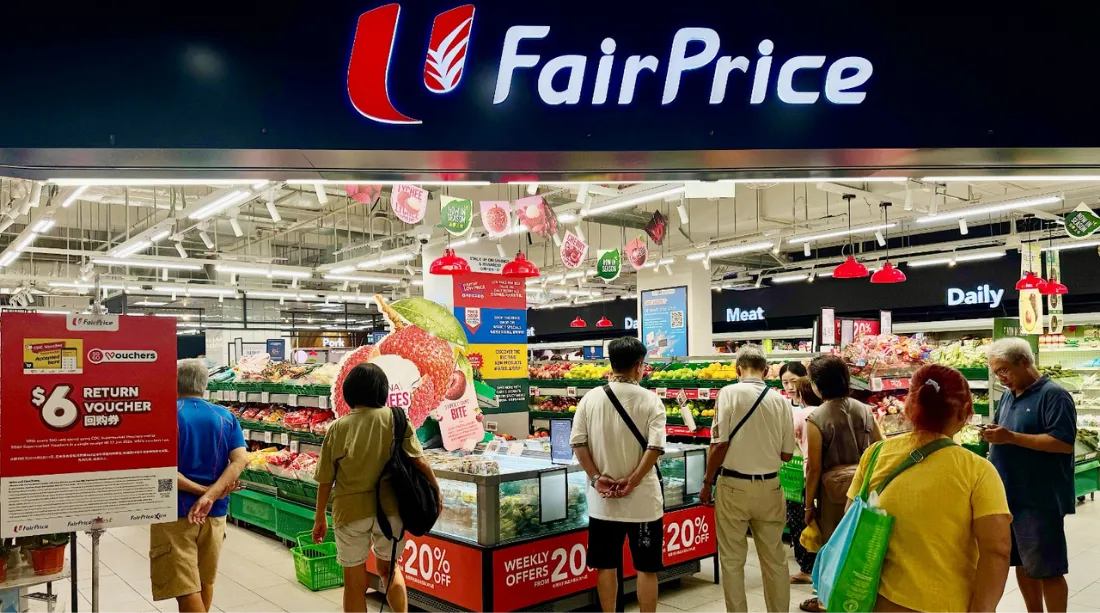
Carrefour Taiwan operates one of the island's largest grocery retail networks, combining large hypermarkets with a rapidly expanding fleet of neighbourhood supermarkets and convenience-format stores. More than a hundred locations are replenished from regional distribution centres, and the store formats differ enough that a single delivery run may serve a hypermarket with a full loading dock and, twenty minutes later, a city-centre store with no dock, a narrow kerbside window and a manual unload.
Grocery retail imposes a distinctive set of constraints on city distribution. Ambient, chilled and frozen goods travel together under different temperature regimes. Fresh categories have delivery windows dictated by shelf-life and by the store's own replenishment routine, not by transport convenience. And a missed delivery is not deferred revenue — for perishable categories it is lost sales that day and an empty shelf that customers notice.
Taiwan's urban geography sharpens all of this. Dense city centres, restricted loading zones, motorcycle-heavy traffic and frequent weather disruption mean that a route plan built on average travel times is wrong on most days. The operating model has to absorb variability rather than assume it away.
How the network was run before
Dispatch was a craft skill. A small group of experienced planners built each day's routes from knowledge of the roads, the stores and the drivers, working from spreadsheets and printed manifests. Their plans were good — often better than a naive algorithm would produce — but they were unrepeatable, undocumented and concentrated in a handful of people whose absence disrupted the whole operation.
Execution visibility ended at the gate. Once a truck departed, the store and the distribution centre both waited. Delivery confirmation arrived as a signed paper manifest that came back with the driver at the end of the shift and was filed, and sometimes rekeyed, over the following days. Disputes about short deliveries or damaged cases were resolved from memory and paperwork weeks later.
Why grocery city distribution is a distinct problem
Retail city distribution is often treated as a simplified version of long-haul transport, and that assumption is where most modernisation programmes go wrong. The constraints are almost entirely local: a store's receiving door, its aisle layout, the hour at which its staff can accept a pallet, the loading regulations on its street. None of these appear in a conventional transport optimisation model, yet together they determine whether a plan survives contact with the day.
Frequency compounds the difficulty. A hypermarket network delivering daily performs tens of thousands of stops a year, so a small inefficiency at each stop — five minutes of paperwork, a ten-minute wait for a receiver — becomes a large recurring cost. Conversely, small per-stop improvements compound into meaningful fleet capacity, which is why the programme concentrated as much on what happens at the door as on how the route is built.
Challenges
Invisible Last-mile Delivery
Vehicles entered 'black box' state after leaving warehouse - stores couldn't know vehicle location or estimated arrival time in real-time.
Experience-dependent Dispatch
Lacked intelligent route planning, completely relied on dispatcher experience, resulting in uneven route loads and difficult vehicle loading rate optimization.
Inefficient Paper Documents
Relied on paper receipt signatures, easily lost and slow circulation, leading to long settlement cycles and inability to immediately confirm actual receipt discrepancies.
Delayed Exception Discovery
Delivery delays, goods damage, and other exceptions relied on store or driver phone feedback, with delayed information and passive response.
Last-mile delivery was invisible in real time
Store managers planned staff around an expected delivery time that was, in practice, an estimate with a multi-hour error band. Shelf-stacking labour was scheduled defensively, and when a truck arrived early or late the store either had people waiting or a pallet sitting in an aisle. Across more than a hundred stores this scheduling friction represented a substantial recurring labour cost that never appeared in the transport budget.
For the distribution centre, invisibility meant that problems were discovered by phone call. A vehicle breakdown, a blocked loading zone or an unusually slow unload propagated through the rest of the route unnoticed until a store rang to ask where its delivery was.
- Delivery ETA communicated to stores as a wide, unreliable window
- Exceptions discovered through inbound phone calls from stores
- No systematic record of arrival, unload duration or departure time
Dispatch depended on individual experience
Because route construction lived in planners' heads, the network could not easily answer questions it needed to answer: what would happen to cost and service if we added fifteen stores, changed a delivery frequency, or moved a temperature-controlled category to a separate run? Scenario analysis requires a model, and the model was tacit.
Succession risk was equally real. Retail distribution planning expertise takes years to build, and the operation's dependence on a few individuals was a structural fragility rather than a staffing inconvenience.
Paper documents slowed everything downstream
Each delivery generated paper: a manifest, a signature, occasionally an annotation about a short or damaged case. That paper travelled at the speed of the vehicle and then queued for handling. Settlement with carriers, resolution of store claims and analysis of delivery quality all inherited that delay, which meant corrective action always lagged the problem by weeks.
Paper also constrains what can be captured. A driver cannot easily attach a photograph to a paper note, so damage disputes had no evidence beyond two conflicting recollections.
Exceptions surfaced too late to fix
The pattern that most frustrated the operations team was structural: almost every exception was learned about after it had already become a service failure. A late-running route could often have been rescued by resequencing the remaining stops or by dispatching a second vehicle, but only if the deviation had been noticed while the route was still in progress.
Deliveries with real-time status coverage
Share of daily store deliveries tracked end to end
What it shows: A staged store rollout reached full real-time coverage of the city distribution network without disrupting daily replenishment.
"Our store managers now know exactly when their deliveries will arrive, and our drivers spend less time on paperwork and more time on actual deliveries."
Distribution Center Director
Carrefour Taiwan Logistics
Solution
Retail City Distribution Digital Foundation
Based on cloud-native TMS architecture and deep collaboration with mobile ePOD, restructured city distribution dispatching, route planning, and last-mile delivery processes to achieve millisecond-level response for retail supply chain.
- Full-chain city distribution transparency
- 100% paperless signatures
- Warehouse-vehicle-store three-terminal collaboration
A digital foundation for retail city distribution
TMS Cloud became the execution system for the whole city distribution network. Store orders arrive from the retail systems, are consolidated into loads that respect temperature regimes and vehicle constraints, and are sequenced into routes that account for store receiving windows, dock availability and realistic urban travel times rather than averages.
The planners' tacit knowledge was deliberately captured as rules during implementation: which stores cannot take a full trailer, which streets are restricted at which hours, which pairs of stores should always be on the same run, which categories must not share a compartment. Encoding that knowledge is what turned a craft skill into a repeatable, improvable process.
- Temperature-aware load building across ambient, chilled and frozen
- Store receiving windows and dock constraints modelled per location
- Planner heuristics captured as explicit, auditable routing rules
Real-time execution and paperless proof of delivery
Drivers work from a mobile task list. Arrival, unload start, unload finish and departure are captured as timestamped events, and proof of delivery is electronic, with signature capture and photographs for any short or damaged case. The record reaches the distribution centre and the store's back office at the moment of delivery rather than at the end of the shift.
That single change removed the largest administrative drag in the network. Settlement runs from complete data, claims are resolved with photographic evidence within days instead of weeks, and delivery quality becomes measurable per store, per route and per driver.
Intelligent dispatch and live exception management
Route optimisation now balances load across vehicles and respects the full constraint set, while live tracking compares actual progress against plan. When a route slips beyond a tolerance, the system raises it to the dispatcher with the options already computed: resequence the remaining stops, split the tail of the route to another vehicle, or notify the affected stores of a revised arrival window.
Stores receive predicted arrival times that update as conditions change, which lets store managers schedule receiving labour against something reliable for the first time.
AI workers for the daily grind
On top of the execution layer, AI workers monitor every active route, prepare the morning exception briefing, flag stores whose receiving performance is drifting, and reconcile carrier charges against executed routes. The dispatcher's attention is spent on the handful of situations that need a decision rather than on watching a hundred routes that are running normally.
The agents also handle the communication layer that used to consume dispatcher time. When an arrival window shifts materially, the affected store is notified automatically with a revised time and the reason, which removed most of the inbound status calls and, more importantly, gave the store enough notice to adjust its own labour plan.
Rolling out without disrupting daily replenishment
Grocery distribution cannot pause for a system migration, so the rollout was staged by store cluster. Each wave ran the new model against a limited set of routes while the remainder continued unchanged, with a deliberate two-week stabilisation period before the next wave started. Drivers were trained on the mobile task list in the depot rather than on the road, and each wave carried a rollback plan that was never needed but made the operation comfortable proceeding.
That staging also produced clean comparative data. Because converted and unconverted clusters ran side by side under the same weather, traffic and demand conditions, the team could measure the effect of the new model directly rather than inferring it from year-on-year comparisons.
Time spent per store stop
Average minutes, before and after paperless operations
What it shows: Electronic proof of delivery removed most of the administrative time at each stop, releasing capacity back to the fleet.
Results
Real-time & Transparent
100+ stores with real-time monitoring, one-screen control of in-transit and arrivals, instant exception closed-loop.
Efficiency & Experience
Paperless operations improved signature efficiency, intelligent dispatch optimized route loads, improving customer service and store experience.
Transparency across more than a hundred stores
Real-time visibility now covers the full city distribution network. Every delivery carries timestamped arrival and departure events and an electronic proof of delivery, and both the distribution centre and the store see the same predicted arrival window. Delivery status enquiries, which used to generate constant inbound calls, largely disappeared because the answer is already visible.
Efficiency in the vehicle and in the store
Paperless operations shortened signature and handover time at each stop, and with more than a hundred stores served daily those minutes compound into meaningful fleet capacity. Intelligent dispatch improved load balance across vehicles, so the same volume moves with better utilisation and fewer partially loaded runs.
The store-side benefit is less obvious but at least as valuable: reliable arrival windows let store managers schedule receiving labour precisely, which reduces both idle waiting and the disruption of an unexpected pallet arriving during peak shopping hours.
Service experience and dispute resolution
Customer and store experience improved on the dimensions grocery retail cares about: shelves replenished within the planned window, fresh categories arriving inside their service window, and claims resolved quickly with photographic evidence rather than argued from memory.
Settlement with transport partners changed character as well. Because every executed route carries a complete event record, charges are reconciled against what actually happened rather than against what was planned, and the monthly dispute cycle that used to consume days of administrative effort now handles a small number of genuine variances.
The compounding effect matters more than any single metric. When a store trusts the arrival window, it orders closer to actual demand rather than padding to protect against a late truck. Lower padding means less inventory sitting in the back room, fewer markdowns in fresh categories and better shelf availability at the moments customers are actually shopping.
A platform for network growth
The most strategic outcome is that adding stores no longer adds proportional planning effort. New locations are onboarded by describing their receiving constraints, dock type and service windows, after which they enter the routing model like any other stop. Expansion into smaller urban formats — which would previously have required a dedicated planning approach — became an extension of the existing model.
The same foundation supports analysis the network could not previously perform. Delivery frequency, vehicle mix and category separation can be tested as scenarios against real cost and service data, so decisions about how to serve a growing store base are made with evidence rather than intuition.
When exceptions are detected
Share of route exceptions caught while the route is still running
What it shows: Moving detection from after the fact to in-flight is what converts an exception from a service failure into a recoverable event.
Store formats served by one distribution model
Share of daily deliveries by store format
- Hypermarket34%
- Supermarket39%
- Convenience format19%
- Other channels8%
What it shows: One rule set handles dock-equipped hypermarkets and kerbside city stores, which is what makes new-format expansion a configuration task.
Key Takeaways
- Achieved real-time visibility for 100+ store deliveries
- Eliminated paper-based proof of delivery entirely
- Reduced settlement cycles through instant digital confirmation
- Enabled proactive exception management instead of reactive responses
Lessons learned
What the team would tell a peer
The Carrefour Taiwan team's central lesson is about respecting the incumbent planners. The programme succeeded because it treated their heuristics as valuable intellectual property to be captured, not as legacy behaviour to be overwritten. Planners who see their expertise encoded in the system become its advocates; planners who see it dismissed become its most effective opponents.
The second lesson is that the store is part of the transport system. Measuring only vehicle metrics misses where much of the cost actually sits, and the biggest wins in this programme came from giving store managers reliable arrival information so they could schedule their own labour differently.
- Capture planner heuristics as explicit rules before optimising
- Model store receiving constraints, not just vehicle constraints
- Make proof of delivery electronic on day one — it unblocks settlement and claims
- Measure store-side receiving labour as part of distribution cost
"Store managers finally schedule receiving labour against an arrival time they believe. That saved more hours in the stores than we saved in the trucks."
Regional Operations Manager
Carrefour Taiwan Store Operations
Products behind this story
TMS Cloud
Transportation management for booking, tendering, in-transit visibility, freight audit and multi-leg international shipments.
Explore TMS CloudWMS Cloud
Warehouse management for inbound, putaway, wave picking, packing, inventory accuracy and multi-site fulfilment.
Explore WMS CloudControl Tower
Cross-network visibility, exception detection and ETA prediction across every order, shipment and carrier.
Explore Control Tower