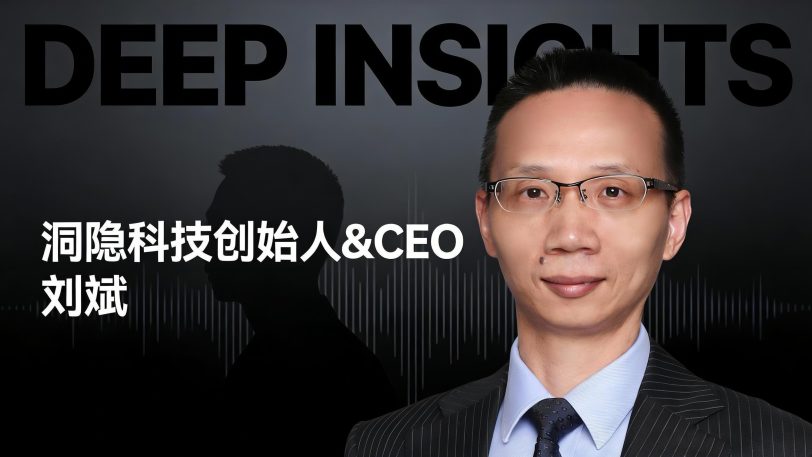
ARC Advisory Group recently interviewed Bin Liu, founder and CEO of Deep Insights. In a wide-ranging conversation, he looked back on how Deep Insights (formed from the merger of KJ Cloud and Gillion) was brought together and rebuilt. He also explained his view of the SaaS model, his practical take on AI's value, and the company's shift from following clients abroad to expanding overseas on its own. It is not a shortcut chasing the latest trend, but a hard, long-term path through China's complex enterprise software market.
Move 1: A merger that combined strengths, not just size
The KJ Cloud–Gillion merger was one of the most watched events in supply chain software in 2023. For Liu, it was never a simple story about getting bigger.
"We wanted a strategic rebuild," he said. KJ Cloud brought its SaaS DNA, cloud-native architecture and reusable products. Gillion brought deep industry know-how, experience with large clients and the ability to handle complex projects. "Combining these two strengths laid a solid foundation for an AI-driven, end-to-end supply chain platform."
After the merger, the company made three connected decisions:
- One product roadmap: a complete portfolio from WMS and TMS to freight forwarding, shipping and container management, offered as one end-to-end platform rather than separate tools.
- One AI strategy: a step-by-step path from AI-enhanced to AI-native, and finally to an AI ecosystem.
- One delivery system: AI-enhanced delivery, using AI to make projects faster and more consistent so the business can scale.
Move 2: Serve large enterprises with SaaS
"SaaS has run into some difficulties in China, but the business model is sound."
In 2016–2017, the team first built SaaS for small and mid-sized businesses. "After about six months we realized it wasn't working. SMB SaaS in China is very hard unless you serve consumers." Liu changed course: "The customers our software already served should be our future SaaS customers. Our SaaS must be able to serve large enterprises."
Move 3: SaaS that supports customization
Large enterprises always need customization. Refusing it loses the customer, but giving in to all of it goes against the idea of SaaS. Deep Insights' answer is SaaS that supports customization.
"On our multi-tenant public cloud, every large customer gets its own customization package," Liu explained. "The main version is updated every two weeks, while each customer's special features live in a separate package. Customers keep their custom functions and choose whether to take each main-version upgrade."
It is like giving each VIP their own carriage on a standard high-speed train. Fast, standard updates and each client's core needs no longer clash, and that is why the company can win and keep large clients.
Move 4: AI as evolution, not disruption
Liu stays calm and practical about AI. "SaaS is about standardizing processes. AI is about intelligence built on data." AI keeps SaaS's subscription model, and "nearly ten years of SaaS has given us a great deal of anonymized data, the best fuel for AI."
AI is also changing how the company builds software. "Since the start of this year we've used AI in our own development process. Our goal is that next year more than 60% of the work is done by AI, with people confirming and validating the other 30–40%." From desktop software to internet software to SaaS and now to AI, "it is another stage of evolution that every company has to go through."
Going global: from following clients to leading the way
"For the past few years, we went overseas by following Chinese companies abroad. From this year, we are going global on our own." Liu has personally led visits to Thailand, Singapore and other Southeast Asian markets. "We will do both: keep serving Chinese companies going overseas, while bringing our supply chain cloud, AI and localized products to local markets."
Conclusion: the long-term path
Throughout the conversation, Liu came across as a clear-headed, committed long-term thinker. With a three-part strategy of SaaS as the foundation, industry focus as the accelerator and AI as the engine, Deep Insights aims to build a lasting path in China's enterprise software market, which takes both patience and skill.
About ARC: Founded in 1986 and headquartered in Boston, ARC Advisory Group is a leading global technology research and advisory firm covering manufacturing, infrastructure, smart cities and new energy.